
search engine MARKETING
Search Engine Marketing (SEM) Training
An SEM (Search Engine Marketing) course typically covers a range of topics related to paid search advertising and online advertising campaigns. Here are some common content areas you can expect to find in an SEM course:

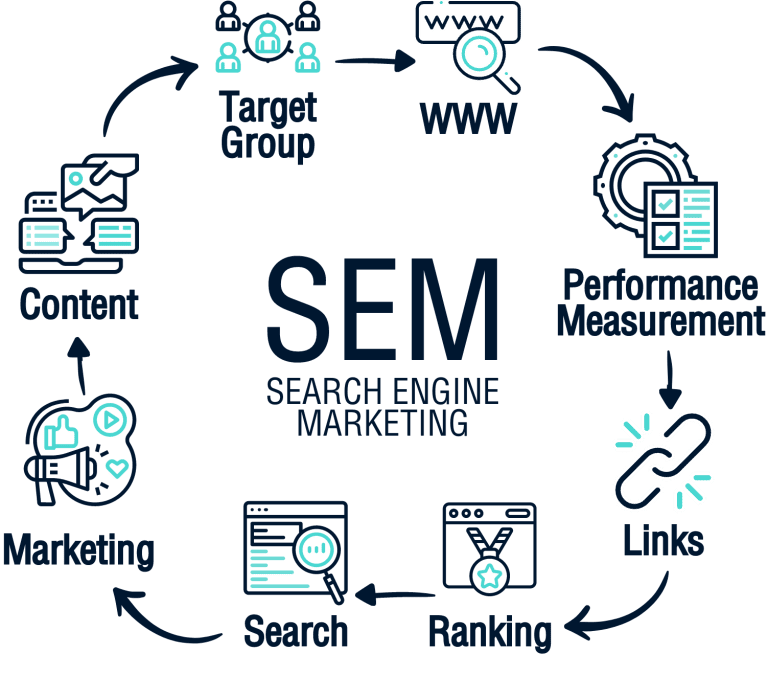
Introduction to SEM:
- Understanding the concept and importance of SEM
- Differentiating between organic and paid search results
- Overview of search engine advertising platforms (such as Google Ads and Bing Ads)
Keyword Research for SEM:
- Conducting keyword research for paid search campaigns
- Utilizing keyword research tools and techniques
- Analyzing keyword competition, search volume, and relevance
Bid Management and Budgeting:
- Understanding the bidding system in search engine advertising
- Managing bid strategies and adjusting bids based on performance
- Setting and optimizing campaign budgets
- Setting and optimizing campaign budgets
Ad Formats and Ad Extensions:
- Exploring different ad formats (text ads, display ads, video ads, shopping ads, etc.)
- Understanding and implementing ad extensions (sitelinks, call extensions, location extensions, etc.)
- A/B testing ad variations to improve performance
Campaign Optimization and Testing:
- Monitoring and optimizing campaign performance
- Split testing ad variations and landing pages
- Applying optimization techniques to improve quality score and ad rankings
- Utilizing ad scheduling and bid adjustments for better performance
Remarketing and Retargeting (Optional):
- Understanding the concept and benefits of remarketing
- Setting up remarketing campaigns and audience lists
- Creating personalized and targeted ads for remarketing campaigns
Creating Effective Ad Campaigns:
- Setting up and structuring ad campaigns and ad groups
- Writing compelling ad copy and headlines
- Optimizing ad extensions to enhance visibility and engagement
- Understanding ad quality score and its impact on campaign performance
Ad Targeting and Audience Segmentation:
- Defining target audiences for ad campaigns
- Utilizing demographic, geographic, and behavioral targeting options
- Leveraging remarketing and audience lists for better targeting
Conversion Tracking and Analytics
- Setting up conversion tracking for ad campaigns
- Analyzing campaign performance metrics (click-through rate, conversion rate, cost per acquisition, etc.)
- Utilizing tracking pixels and goal tracking in Google Analytics
Display and Video Advertising (Optional):
- Overview of display advertising and ad networks
- Creating effective display and video ad campaigns
- Utilizing targeting options and ad formats for display and video ads
It’s important to note that the specific content and depth of an SEM course may vary depending on the course provider and the target audience (beginner, intermediate, advanced). Additionally, the course may cover specific advertising platforms like Google Ads or provide a broader perspective on search engine marketing strategies.